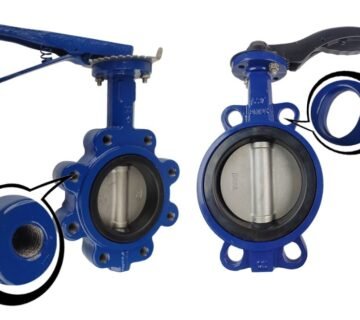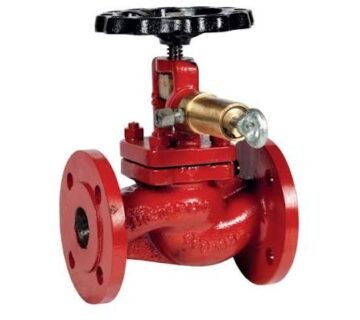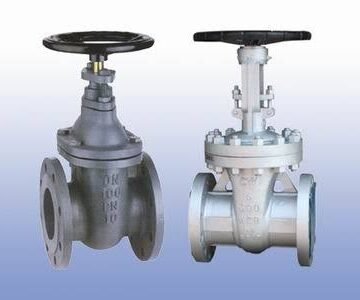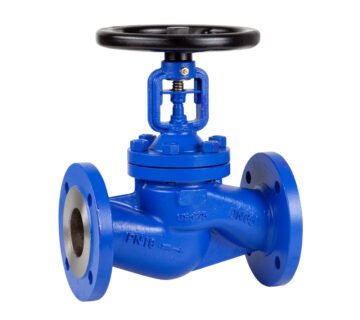
Ask for bronze valves and you might be handed brass. Ask for brass and you might get bronze. Both are copper alloys, they look alike once they’ve tarnished, and the names get swapped on quotations all the time. Put the wrong one in a seawater line, though, and the difference eventually shows up as a leaking valve.
The short version: bronze is copper with tin, and it’s the standard choice for seawater, marine service and anywhere you’re unsure of the water. Brass is copper with zinc. Standard brass is fine for clean freshwater, compressed air and many approved gas valves, but it can lose its zinc in salty or aggressive water. DZR brass is a modified brass made to resist that, mainly for drinking water.
What’s actually in each alloy
Bronze is copper alloyed mainly with tin. Most valve bronze also contains some zinc and lead, which make it easier to cast and machine, and that mix is often called gunmetal. The best-known valve grade is ASTM B62, alloy C83600, known in the trade as 85-5-5-5 for its roughly 85% copper and 5% each of tin, lead and zinc. Japanese-standard valves use CAC406, often still marked with its old name BC6. The closest European grade is CC491K, which British engineers still call LG2.
Brass is copper alloyed mainly with zinc. A typical forged brass valve body, CW617N, is around 40% zinc with a little lead for machining. DZR brass such as CW602N has less zinc and a small arsenic addition that slows the corrosion described below.
One detail explains a lot of the confusion. The 85-5-5-5 alloy that the valve trade calls bronze is grouped with the red brasses in the US copper alloy numbering system, because it contains zinc as well as tin. Two honest suppliers can describe the same valve with different words.
Dezincification: how brass fails in the wrong water
Dezincification is corrosion that removes zinc from brass and leaves copper behind. The part keeps its shape, but the metal that’s left is porous and weak. A dezincified valve can look fine until it weeps at a thread or breaks when someone puts a spanner on it.
It’s more likely when:
- The water contains chloride, which makes seawater, brackish water and salty ground water risky for standard brass.
- Water sits still or flows slowly, so corrosion products stay against the metal.
- The water is soft and slightly acidic, or carries dissolved carbon dioxide.
- Temperatures are high, since heat speeds up most corrosion.
Signs to look for on a brass valve are pink or coppery patches on the yellow surface, white crusty deposits around joints, and seepage at threads. If you find them in a seawater or salty line, the material was the wrong choice.
Bronze resists dezincification because it relies on tin and has much less zinc. DZR brass resists it because of its lower zinc content and the arsenic addition.
Where each one belongs
Seawater and marine systems: bronze
On ships, small-bore marine valves in seawater service, such as cooling water connections and fire hose valves, are commonly bronze or gunmetal. Standard brass doesn’t last in seawater. For harder seawater duty, some marine makers use aluminium bronze instead.
Local conditions add to the case for bronze. The Arabian Gulf is noticeably saltier than the open ocean and very warm in summer, and both work against the wrong copper alloy.
Drinking water in buildings: DZR brass or bronze
Both are used for potable water. Which one a project accepts depends on its specification and local approvals, including limits on lead content for drinking water. If you don’t know the water chemistry, don’t use standard brass.
Compressed air, instrument air and many gas lines: brass
Clean, dry service is where brass makes the most sense. It forges and machines easily, so brass ball valves and screwed valves are economical and widely available. For gas, use valves approved for that gas and pressure, which are often brass.
Steam: bronze, within the rating
Bronze gate and globe valves are common on low-pressure steam, and ASTM B61 covers a bronze grade specifically for steam and valve castings. Brass ball valves are usually limited by their PTFE seats more than their bodies, so check the valve’s pressure-temperature rating as well as the material.
Chilled water and HVAC: depends on the water
Where the water is treated and controlled, brass valves are widely used. Where treatment is uncertain, bronze or DZR brass is the safer choice.
How to tell bronze from brass in the warehouse
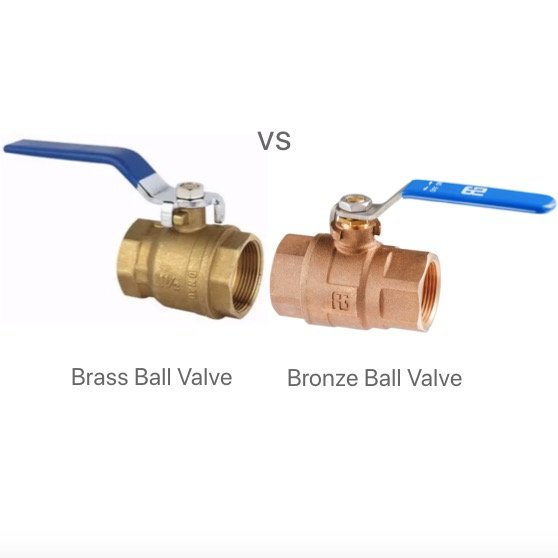
Colour helps when the metal is clean: brass is bright yellow to gold, bronze is reddish brown. Once both have tarnished, colour isn’t reliable.
How the valve was made is a better clue. Brass ball valves and many other small brass valves are hot-forged and then machined, which leaves crisp edges and smooth surfaces. Bronze bodies are usually sand-cast, with a slightly rough texture and cast-in lettering.
Markings settle it. For bronze, look for B62, CAC406 or BC6, CC491K or LG2. For brass, look for CW617N, CW602N or a DZR mark. If the body isn’t marked, ask for the material certificate. An EN 10204 type 3.1 certificate gives the test results for the material, including its composition.
A quick decision guide
- Seawater, brackish water or a marine system? Bronze, or aluminium bronze for harder duty.
- Drinking water? DZR brass or bronze, to the project specification and local approvals.
- Steam? Bronze, within the valve’s rated pressure and temperature.
- Clean compressed air, instrument air or approved gas service? Brass is usually fine and costs less.
- Not sure what’s in the water? Bronze.
Bronze and brass valves at VectorFlow
VectorFlow stocks bronze valves and brass valves. Screwed valves come in bronze, brass and stainless steel from 1/8″ to 4″, with NPT or BSPT threads. Globe and angle valves are available in bronze and brass, as well as iron and steel grades, from 1/4″ to 14″. Hose valves come in bronze, brass and cast iron from 0.5″ to 2.5″, with flanged, Storz or Nakajima connections. All are available to JIS, DIN or ASME standards. Contact the team with the medium and the standard, and they can confirm the right alloy. For more on the bronze range, see our bronze valve supplier in Dubai guide.
Phone: +971 4 397 8524 | Email: enquiries@vectorflowvalves.com | VectorFlow Valves Trading LLC, Ras Al Khor Industrial Area 2, Dubai, UAE
Frequently asked questions
Is gunmetal bronze or brass?
Gunmetal is a bronze: copper with tin, plus some zinc and lead. The 85-5-5-5 alloy in ASTM B62 and LG2 (CC491K) are both gunmetals.
Can brass valves be used in seawater?
Standard brass, no. It dezincifies. Use bronze or aluminium bronze for seawater.
Is DZR brass as good as bronze?
For the job it was designed for, drinking water where dezincification is a risk, DZR brass works well and costs less. For continuous seawater service, bronze is still the usual choice.
Why are brass valves cheaper than bronze valves?
Zinc costs much less than tin, and brass can be hot-forged and machined in high volumes. Bronze is usually cast, which takes more steps.
Do bronze valves contain lead?
Many do. The common 85-5-5-5 alloy has about 5% lead to help casting and machining. Low-lead and lead-free bronzes exist for drinking water where regulations require them.