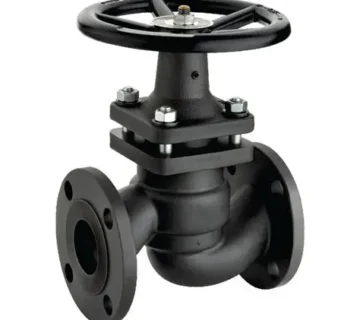
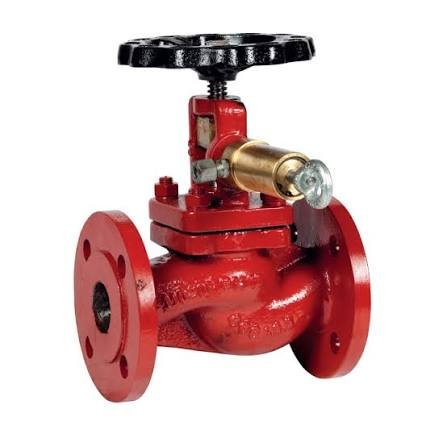
A quick-closing valve is the valve that stops a fuel tank from feeding an engine room fire. It’s fitted directly on the tank, it stays open in normal service, and it can be tripped shut from a safe position outside the space. SOLAS makes it mandatory on oil fuel tanks of 500 litres or more located above the double bottom, and Port State Control officers can ask the crew to show that it works.
This guide covers what the regulation says, how the common designs work, why these valves fail inspections, and what to check when you buy a replacement.
What SOLAS requires
The requirement is in SOLAS chapter II-2, regulation 4.2.2.3.4. In plain terms: any oil fuel pipe that would let oil escape if it were damaged, and that comes from a storage, settling or daily service tank of 500 litres or more above the double bottom, must have a valve directly on the tank that can be closed from a safe position outside the space if there’s a fire in that space.
“Directly on the tank” has some practical tolerance. Class interpretations accept a short length of pipe between the tank and the valve, mainly to allow for insulation and to put the valve where the crew can reach it.
Two related points from the same regulation come up often:
- Where several engines are supplied from the same fuel source, there must be a way to isolate the fuel supply and spill piping to each engine individually. A quick-closing valve on each engine’s supply line is one common way to do it.
- For the emergency generator’s fuel tank, the remote control has to be in a separate location. A unified interpretation of the regulation clarifies that a separate location doesn’t have to mean a separate space.
What changed in 2026, and what didn’t
On 1 January 2026, amendments to SOLAS II-2/4.2 adopted by IMO resolution MSC.520(106) came into force. They deal with fuel flashpoint. Before bunkering, the ship must receive a declaration from the fuel supplier that the fuel meets the flashpoint requirement, and the bunker delivery note must state the flashpoint or confirm it was measured at or above 70°C.
The quick-closing valve requirement itself didn’t change. It sits in the same regulation, though, so if your team is reviewing fuel safety procedures for the new paperwork, it’s a sensible moment to test the valves as well.
How quick-closing valves work
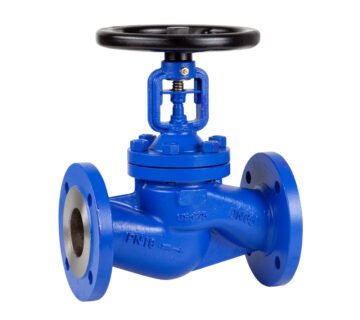
Most quick-closing valves are globe-type valves, straight or angled, with a spring-loaded closing mechanism. In normal service a latch or piston holds the valve open. Release it and the spring shuts the valve.
There are three common ways to trip it remotely:
- Pull wire. A steel wire runs from a handle at the remote station, over sheaves, to the valve, and pulling it releases the latch. It needs no power, but the wire has to stay free along its whole route.
- Pneumatic. Compressed air from a dedicated supply at the remote station drives a small cylinder on the valve. This is practical where several valves are tripped from one panel.
- Hydraulic. The same principle, using oil pressure.
Many designs combine a handwheel with the release unit, so the valve can also be opened and closed normally for maintenance. After a trip, most have to be reset at the valve before the tank can be used again.
Electrically triggered closing is worth checking before you choose it. The Netherlands Shipping Inspectorate, for example, has stated that electrical activation of quick-closing valves is not allowed in principle unless agreed otherwise. It reached that position after finding a main propulsion fuel valve that would close automatically if a single wire broke. Check with your flag and class first.
Why quick-closing valves fail inspections
The Australian Maritime Safety Authority (AMSA) issued a marine notice in 2024 after seeing more failures of remotely operated fuel isolation valves. It reminded operators that Port State Control inspections can include testing quick-closing valves, including by remote operation, and that a ship may be detained if the remote quick-closing devices have deteriorated to the point where they won’t work when needed.
Industry auditors have reported finding quick-closing valves blocked so they can’t close. Other things that stop a valve working when it’s needed:
- Pull wires that are seized, slack or corroded, or sheaves painted over so they no longer turn.
- An empty or isolated air bottle, leaking air lines or a stuck cylinder.
- A valve that closes but doesn’t seal, because the seat is damaged or debris is trapped.
- Remote handles without clear labels, so nobody is sure which one closes which tank.
- A crew that hasn’t practised the test and isn’t confident doing it in front of an inspector.
A practical testing routine
Follow your company’s planned maintenance system and the maker’s instructions. As a general pattern:
- Plan the test so it doesn’t starve a running engine or generator. Tripping the valve on a daily service tank that’s feeding a running machine can shut it down.
- Check the route from the remote station to the valve: wires free and tensioned, sheaves turning, air pressure up, no leaks.
- Trip the valve from the remote station and confirm it closes fully.
- Confirm it holds, with no flow past the seat.
- Reset it, confirm it latches open, and return the tank to service.
- Record the test in the planned maintenance system.
Buying a replacement quick-closing valve
Match the existing valve before anything else:
- Size, flange standard and drilling, and pressure rating. Many ships built in Asia use JIS standard valves and flanges, so don’t assume DIN or ANSI.
- Pattern, straight or angle, and the face-to-face or centre-to-face dimension, so it fits without pipe changes.
- Release type: pull wire, pneumatic or hydraulic, matching the remote system already on board.
- Body material. Quick-closing valves sit on tanks of flammable liquid, and you’ll typically find them in ductile iron or cast steel.
- Certificates: whatever your class society requires for that position.
VectorFlow supplies quick-closing valves in ductile iron from 15 mm to 200 mm, flanged, to JIS, DIN or ANSI standards. The catalogue lists ABS type approval along with Bureau Veritas, Lloyd’s Register and DNV foundry approvals, and valves can be tested in-house or by a third party. Contact the team to ask which certificates apply to the valve you’re ordering, and send photos of the existing valve’s nameplate and release unit so the replacement matches what’s on board. VectorFlow also lists emergency shut-off valves alongside its other marine valves.
Phone: +971 4 397 8524 | Email: enquiries@vectorflowvalves.com | VectorFlow Valves Trading LLC, Ras Al Khor Industrial Area 2, Dubai, UAE
Frequently asked questions
Which tanks need a quick-closing valve?
Under SOLAS II-2/4.2.2.3.4, oil fuel storage, settling and daily service tanks of 500 litres or more located above the double bottom, where a damaged pipe would let fuel escape. Class rules may add requirements for other tanks, so check yours.
Does the valve have to be fitted directly on the tank?
The regulation says directly on the tank. Class interpretations accept a short length of pipe between the tank and the valve, mainly for insulation and crew access.
Can a quick-closing valve be operated electrically?
Some administrations don’t accept electrical activation in principle, and the Netherlands is one example. Check with your flag and class before choosing an electrically triggered design.
Can Port State Control detain a ship over quick-closing valves?
Yes. AMSA’s guidance says a ship may be detained if the remote quick-closing devices have deteriorated so much that they won’t work when needed.
This article summarises the regulations for general guidance. Always check the current SOLAS text and your class society’s rules for your ship.