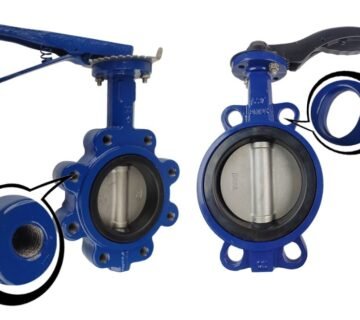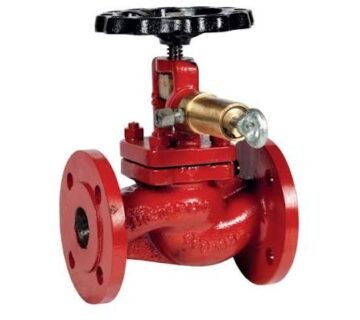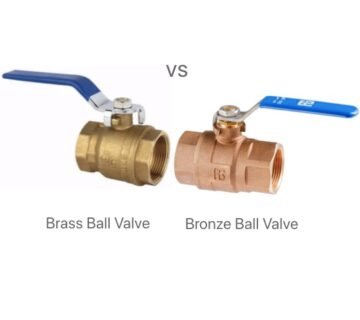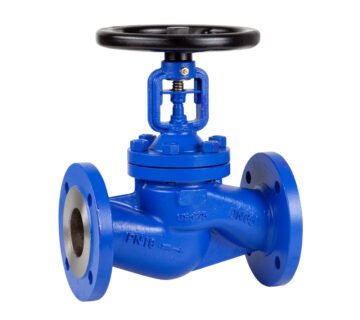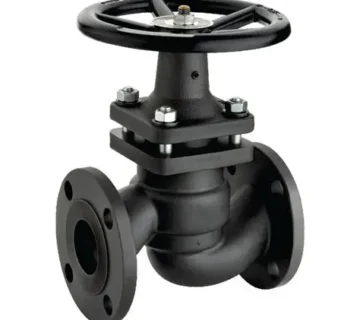
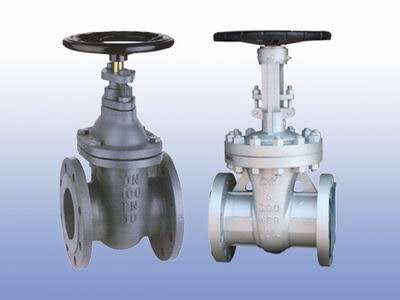
Grey cast iron, ductile iron and cast steel valves look almost identical once they’re painted the same colour, and most people couldn’t tell them apart on a warehouse shelf. They behave very differently on the day something goes wrong. One cracks. One bends. One bends and can be welded back together.
Here’s the short version. Grey cast iron is fine for clean, low-pressure water service where nothing shocks the line. Ductile iron gives you most of iron’s low cost with real toughness, and marine class rules accept it in places where they won’t accept grey iron. Cast steel is what you want for steam, hydrocarbons, higher pressures and anything you may need to weld-repair.
The rest of this guide explains why, decodes the grade marks you’ll find on valve bodies and datasheets, and covers the shipboard rules that make the choice for you.
The three materials side by side
| Grey cast iron | Ductile iron | Cast steel | |
| Also called | Cast iron, CI, flake graphite iron | SG iron, nodular iron, DI | Carbon steel casting, CS |
| Common grades | EN-GJL-250 (old DIN GG-25), JIS FC250, ASTM A126 Class B | EN-GJS-400-15 (old DIN GGG-40), JIS FCD400 and FCD450, ASTM A536 | ASTM A216 WCB, EN 1.0619 (old DIN GS-C25), JIS SCPH2 |
| Minimum tensile strength | 250 MPa (EN-GJL-250) | 400 MPa (EN-GJS-400-15) | 485 MPa (WCB) |
| Minimum elongation | Not specified, typically below 1% | 15% (EN-GJS-400-15) | 22% (WCB) |
| Under shock or water hammer | Can crack without warning | Deforms before it breaks | Deforms before it breaks |
| Weld repair | Difficult, rarely done on pressure parts | Possible with specialised procedures | Routine |
| Typical ratings | PN10 and PN16, ASME Class 125 and 250 | PN16 and PN25, ASME Class 150 and 300 | ASME Class 150 and up, PN16 to PN40 and higher |
| Typical service | Freshwater, cooling water, HVAC, low-pressure utilities | Water mains, bilge and ballast lines, butterfly valve bodies, quick-closing valves | Steam, oil and gas, hydrocarbons, high pressure and temperature |
Strength and elongation figures are the minimums built into the grade names and ASTM A216. For a real valve, the manufacturer’s pressure-temperature rating is the number that counts.
Why grey cast iron cracks
Grey iron gets its name from the colour of a fresh fracture, and that colour comes from graphite. In grey iron the graphite forms as thin flakes running through the metal. Each flake behaves like a small crack that is already there. Under steady load that hardly matters. Under a sudden load, a crack can run from flake to flake almost instantly.
That’s why grey iron valves are happiest in boring service: steady pressure, moderate temperature, pipework that’s properly supported. They machine easily, damp vibration well and cost less than either alternative, which is why you still find them throughout building services and water networks.
Trouble starts with the things grey iron can’t absorb. Water hammer when a pump trips. Thermal shock. A pipe that was pulled into alignment. A bolt torqued too hard. One classic mistake is bolting a flat-faced cast iron flange to a raised-face steel flange: as the bolts tighten, the iron flange bends around the raised face and cracks. If you have to join the two, the usual practice is a flat-faced steel flange with a full-face gasket.
Ductile iron: same family, different behaviour
Ductile iron starts out as almost the same molten metal. Before casting, the foundry treats it, usually with magnesium, so the graphite forms as small round nodules instead of flakes. Round nodules don’t act like cracks. The result is an iron that stretches before it breaks. EN-GJS-400-15 has to reach at least 15% elongation in a tensile test, where grey iron barely stretches at all.
You’ll see it called SG iron (spheroidal graphite), nodular iron or simply DI. Older German datasheets call it GGG, which is why GGG-40 and GGG-50 still turn up on quotations. JIS uses the prefix FCD.
For a buyer the appeal is simple. Ductile iron costs a little more than grey iron and copes far better with shock, vibration and pipe strain. Many butterfly valve bodies are ductile iron, and so are VectorFlow’s quick-closing valves, which sit on fuel tanks where a cracked body is not an option.
Where it’s less convenient is welding. Ductile iron can be welded, but it needs specialised procedures, and most people don’t weld-repair ductile iron pressure parts. If the body is damaged, you replace the valve.
Cast steel: when iron isn’t enough
Cast steel has no free graphite at all, which is the main reason it’s tougher and more predictable than either iron. ASTM A216 WCB is the workhorse grade for valves. The letters are commonly read as “weldable cast, grade B”, and the weldability is real: the standard allows castings to be repaired by welding.
Choose cast steel when any of these apply:
- The line carries fuel, oil, other hydrocarbons, gas or steam.
- The pressure is above what iron valves are rated for. Ductile iron flanges stop at ASME Class 300 under ASME B16.42, and steel is the normal choice above that.
- The temperature is high. ASME B16.34 rates WCB from -29°C and flags it as not recommended for prolonged use above 425°C.
- The valve may see fire exposure, heavy vibration or significant pipe loads.
- You may need to weld to it or repair it later.
For colder service the low-temperature grades LCB and LCC (ASTM A352) take over from WCB. Sour service with hydrogen sulphide brings in NACE MR0175 / ISO 15156, and corrosive media may call for stainless steel castings instead.
On ships, the rules often decide for you
Ashore, choosing between grey iron and something tougher is mostly an engineering judgement. On a classed ship, part of that judgement has already been made for you, especially for marine valves on the ship’s side and the collision bulkhead.
IACS Unified Requirement P2, which class societies build into their piping rules, says ordinary cast iron shall not be used for sea valves and pipes fitted on the ship’s side, or for valves fitted on the collision bulkhead. It accepts ferritic nodular (ductile) iron for systems such as bilge, ballast and cargo oil piping, with specified material properties required when the valve is on the ship’s side.
SOLAS says it in plain words for the collision bulkhead. Regulation II-1/12 requires valves on a pipe through the collision bulkhead to be of steel, bronze or another approved ductile material, and states that valves of ordinary cast iron are not acceptable.
So when a ship-side valve needs replacing in dry dock, a grey iron valve that happens to fit the flanges is not a substitute, however quickly it’s available. Ask for the material grade and certificate before it goes on board. Class rules also set pressure, temperature and pipe class limits beyond what’s summarised here, so the ship’s class society has the final word.
How to read the marks on a valve body
Grade codes are the quickest way to know what you’re holding. These are the ones that come up most in the UAE market, where JIS, DIN and ASTM valves sit on the same shelves:
- FC200 or FC250 (JIS), GG-20 or GG-25 (old DIN), EN-GJL-250 or material number EN-JL1040: grey cast iron.
- FCD400 or FCD450 (JIS), GGG-40 or GGG-50 (old DIN), EN-GJS-400-15 or material number EN-JS1030: ductile iron.
- WCB (ASTM A216), SCPH2 (JIS), GS-C25 or 1.0619 (DIN and EN): cast carbon steel.
- A126 Class B: grey iron to ASTM, common on American-pattern valves.
- A536 or A395: ductile iron to ASTM.
If the cast marks are worn or painted over, ask for the material certificate. An EN 10204 type 3.1 certificate links the valve to tested results for the material it was made from. For the grades and standards VectorFlow supplies, see the materials and standards page.
A quick way to choose
Work through these in order and stop at the first yes:
- Is the valve on the ship’s side, on the collision bulkhead, or anywhere else class rules exclude ordinary cast iron? Use ductile iron, steel or bronze as the rules allow. Not grey iron.
- Does the line carry fuel, oil, steam or gas, or run above ductile iron’s ratings? Use cast steel, or stainless steel if the medium needs it.
- Will the valve see water hammer, vibration, thermal shock or pipe strain? Use ductile iron at minimum.
- Is it clean water at low pressure and steady temperature? Grey cast iron will do the job, and it’s the cheapest option.
What VectorFlow stocks
VectorFlow’s range covers cast iron valves, ductile iron valves and cast steel valves, along with forged steel, stainless steel, bronze and brass. Globe and angle valves come in every one of those materials from 1/4″ to 14″, to JIS, DIN and ASME standards, flanged or screwed. Butterfly valves come with cast iron, ductile iron, carbon steel and stainless steel bodies.
Valves can be tested in-house at the 22,000 sq ft facility in Ras Al Khor or by a third party. The catalogue lists ABS type approval along with Bureau Veritas, Lloyd’s Register and DNV foundry approvals, so ask which certificate applies to the valve you’re ordering. If you’re not sure which body material a replacement needs, contact the team with the old valve’s markings, size, flange standard and service conditions, and they can help match it.
Phone: +971 4 397 8524 | Email: enquiries@vectorflowvalves.com | VectorFlow Valves Trading LLC, Ras Al Khor Industrial Area 2, Dubai, UAE
Frequently asked questions
Is ductile iron the same as cast iron?
Both are cast irons with similar chemistry, so in that sense yes. The difference is the shape of the graphite. Flakes make grey iron brittle, and round nodules let ductile iron stretch before it breaks. On a datasheet, “cast iron” on its own almost always means grey iron.
Can I replace a cast iron valve with a ductile iron one?
Usually yes, and it’s an upgrade. Match the face-to-face length, flange standard, drilling and pressure rating of the old valve. Also check the flange facing: grey iron valves are often flat-faced, and the mating flange and gasket should suit.
What does WCB mean?
WCB is a carbon steel casting grade in ASTM A216, the standard most cast steel valves are made to. The letters are commonly read as “weldable cast, grade B”. The neighbouring grades WCA and WCC have different strength levels.
Are cast iron valves allowed on ships?
In many low-pressure systems, yes. IACS rules accept ordinary cast iron in principle for Class III piping. They don’t accept it for sea valves on the ship’s side or valves on the collision bulkhead, and SOLAS repeats that for the collision bulkhead.
Why are grey cast iron valves still so common?
Because in the right service they last a long time. They’re cheap, easy to machine and perfectly suited to steady, low-pressure water lines, which describes a large share of building and utility pipework. Problems start when they’re installed where they don’t belong.